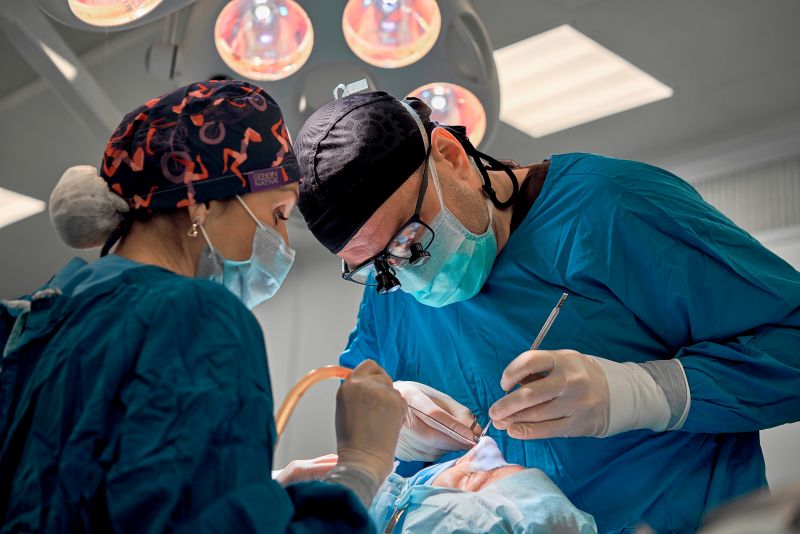
Rhinoplasty can accomplish a lot. Not only can it enhance your facial aesthetics, but it may provide functional benefits as well. You have a lot to look forward to if you are considering this service! But what exactly will your surgeon do during your appointment? While each treatment plan is unique, there are some steps that are almost universal. This blog post walks you through a standard rhinoplasty procedure.
Anesthesia
During your rhinoplasty procedure, anesthesia will be administered to promote your comfort and safety. You will either receive local anesthesia with sedation or general anesthesia, depending on your individual case and your surgeon’s recommendation. Your surgeon or a member of their team will explain everything beforehand, so you will know exactly what to expect and feel confident in the process. You will not feel pain during the surgery, and your care team will monitor you closely throughout the procedure.
Incision
Once you are comfortably anesthetized, your surgeon will make careful incisions to access the structures of your nose. Rhinoplasty procedures use either a closed technique, where incisions are hidden inside the nostrils, or an open technique, where a small incision is made across the columella, the tissue between your nostrils. Your surgeon will choose the method that best suits your needs and desired outcomes. The placement of incisions will be carefully chosen to minimize visible scarring.
Reshaping
After making the necessary incisions, your surgeon will begin reshaping your nose to achieve the desired appearance and function. This may involve removing or adding bone and cartilage, or adjusting the nasal tip and bridge to enhance symmetry and balance. The techniques used will depend on your unique anatomy and goals discussed during your consultation. Throughout the process, your surgeon will be focused on creating results that look natural and fit harmoniously with your facial features.
Closing Incisions
Once the reshaping is complete, your surgeon will carefully close the incisions using fine sutures. You may have splints or dressings placed on your nose to support it as you begin the healing process. The surgical team will provide detailed instructions for caring for your incisions and maintaining cleanliness.
Recovery
After your rhinoplasty, you will spend some time in a recovery area as the effects of the anesthesia wear off. This is usually an outpatient procedure, so you can expect to go home the same day. Swelling, bruising, and mild discomfort are normal during the initial days of your healing, but these symptoms will gradually improve. Most patients return to their normal activities within one to two weeks, although full healing may take several months. Your surgeon will schedule follow-up appointments to monitor your progress and answer any questions you may have.
Rhinoplasty can be an exciting journey! Talk to your surgeon to learn more about the techniques they will use to help you achieve your desired results.
Meet the Practice
Dr. Irvin M. Wiesman is a top-rated, board-certified plastic surgeon and an active member of both the American Society of Plastic Surgeons and the prestigious American Society of Aesthetic Plastic Surgery. Rhinoplasty is among the many services that he offers. If you are interested in this procedure, our team would be happy to welcome you in for a consultation. Contact our Chicago office at 312-981-1290.